Grade 7 Resources
Resources aligned to the Grade 7 NL curriculum: physical sciences and the Earth’s crust. Here you’ll find worksheets, demos, and activity ideas.
10.1 - Classify minerals based on their physical properties
A Mineralogist's Mystery
Students take on the role of a mineralogist tasked with identifying unknown minerals from a Labrador mine site, using tests for colour, lustre, streak, hardness, and other properties to solve the case. Includes the Science 7 textbook lab manual and a student handout.
10.2 - Classify rocks based on their characteristics and method of formation
Igneous Rocks: Cooling Rate and Crystal Size
A MUNGO-made experiment using Epsom salt solutions cooled at different rates to model how igneous rocks form, comparing slow "plutonic" cooling (large crystals) to fast "volcanic" cooling (tiny crystals). Guides students through the full scientific method, from hypothesis to conclusions. Includes a student lab handout.
Sedimentary Rock Demonstration
A MUNGO-made 19-minute classroom demonstration using a "sedimentator tube" to show how sediment settles by grain size and lithifies into conglomerate, sandstone, and shale. Covers erosion, deposition and sorting, rock classification, and lithification through compaction and cementation. Includes a demonstration plan.
Metamorphic Rocks: Modelling Foliation with Play-Doh and Pennies
A MUNGO-made hands-on activity using Play-Doh and pennies to model how pressure aligns minerals into layers, forming a foliated metamorphic rock like schist. Includes a comparison with granite and gneiss samples to show how foliation helps identify metamorphic rocks.
10.3 - Describe the characteristics of Earth’s crust and some of the technologies which have allowed scientists to study geological features in and on the Earth’s crust
Make Your Own Earth Layers Model
A MUNGO-made hands-on activity where students cut, stack, and glue colored paper circles to build a labelled model of Earth's layers. Includes student and teacher versions, plus a ready-to-photocopy sheet of Earth layer cutouts.
10.4 - Examine some of the catastrophic events that occur on or near Earth’s surface (i.e., earthquakes, volcanic eruptions)
Waves of Disaster: The 1929 Grand Banks Earthquake & Burin Peninsula Tsunami
A MUNGO-made STSE activity examining the 1929 Grand Banks earthquake and the tsunami it triggered on the Burin Peninsula. Students analyze cable-break data to understand how the event unfolded, then explore the science, technology, and societal questions around tsunami warning systems in the Atlantic.
STEM Challenge: Resisting Destruction from Earthquakes
A MUNGO-made engineering design challenge where students build earthquake-resistant towers from linguini and marshmallows, then test them on a DIY shake table. Walks through the full engineering design process, from background earthquake science to building, testing, and reflecting. Includes lesson plans for two class-length options, a grading rubric, and a teacher's answer key (teacher version only).
Finding an Earthquake Epicenter Activity
A MUNGO-made activity exploring how earthquakes and seismic waves work, reading real seismograms, and using data from three seismic stations to triangulate an earthquake's epicenter on a map.
10.5 - Organize and analyze data on the geographical distribution of earthquakes and volcanoes to determine patterns and trends
The Ring of Fire and Beyond: The Living Map
A year-long, MUNGO-made project where students track real-world earthquakes and volcanoes on a pushpin map each week, then discover for themselves how the patterns line up with tectonic plate boundaries. Builds from blind data collection through pattern analysis to a final "big reveal" and research report. Includes a weekly activity log and teacher's cheat sheet for guiding discussion, teacher version only.
10.6 - Explain the processes of mountain formation
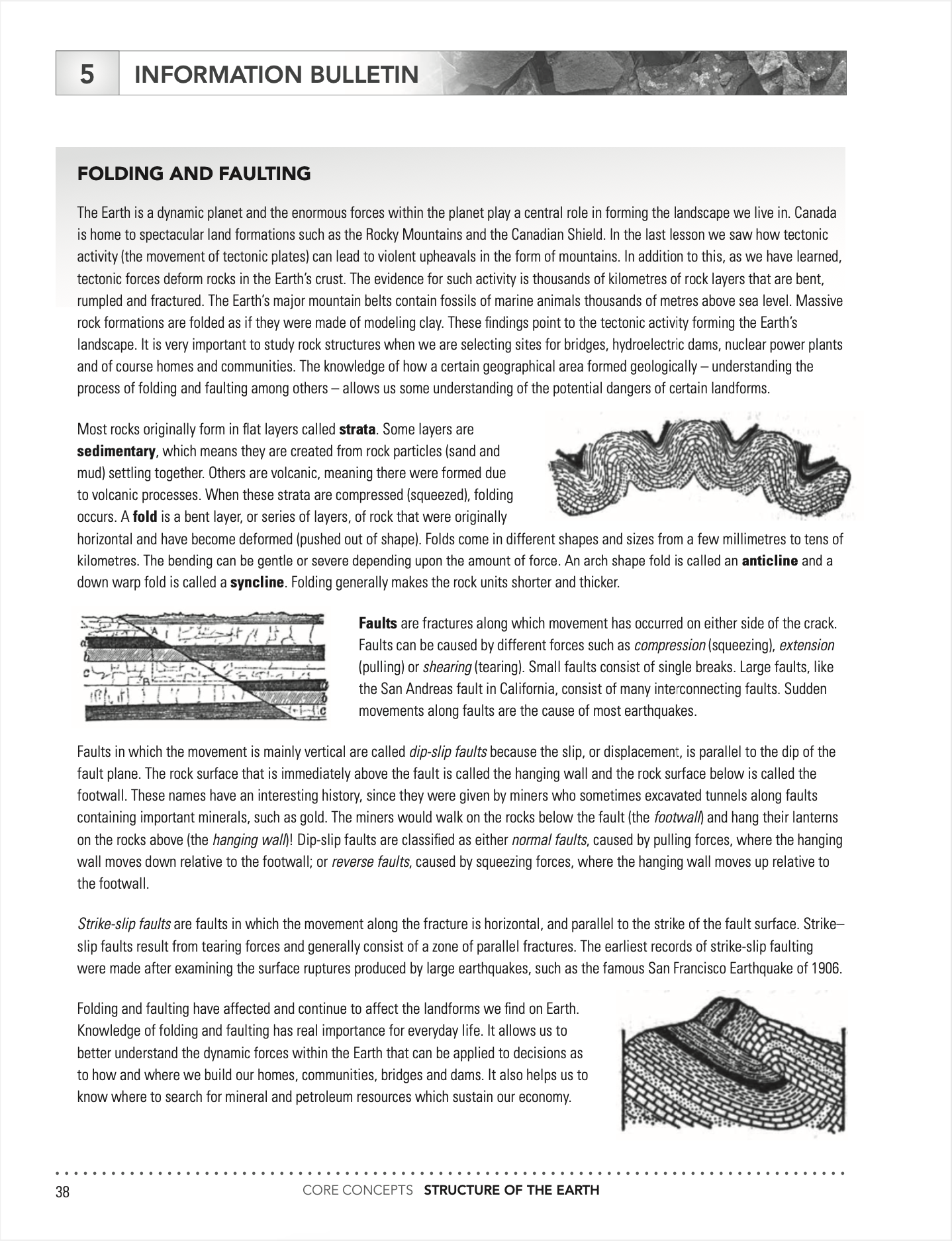
Folding and Faulting: Play-Dough Mountain Building
A hands-on model using layered Play-Doh to simulate folding and erosion, a quick Popsicle-stick demo showing how brittle rock breaks to form faults, and more. Provided by Mining Matters.
10.7 - Develop a chronological model or geological time scale of major events in Earth’s history
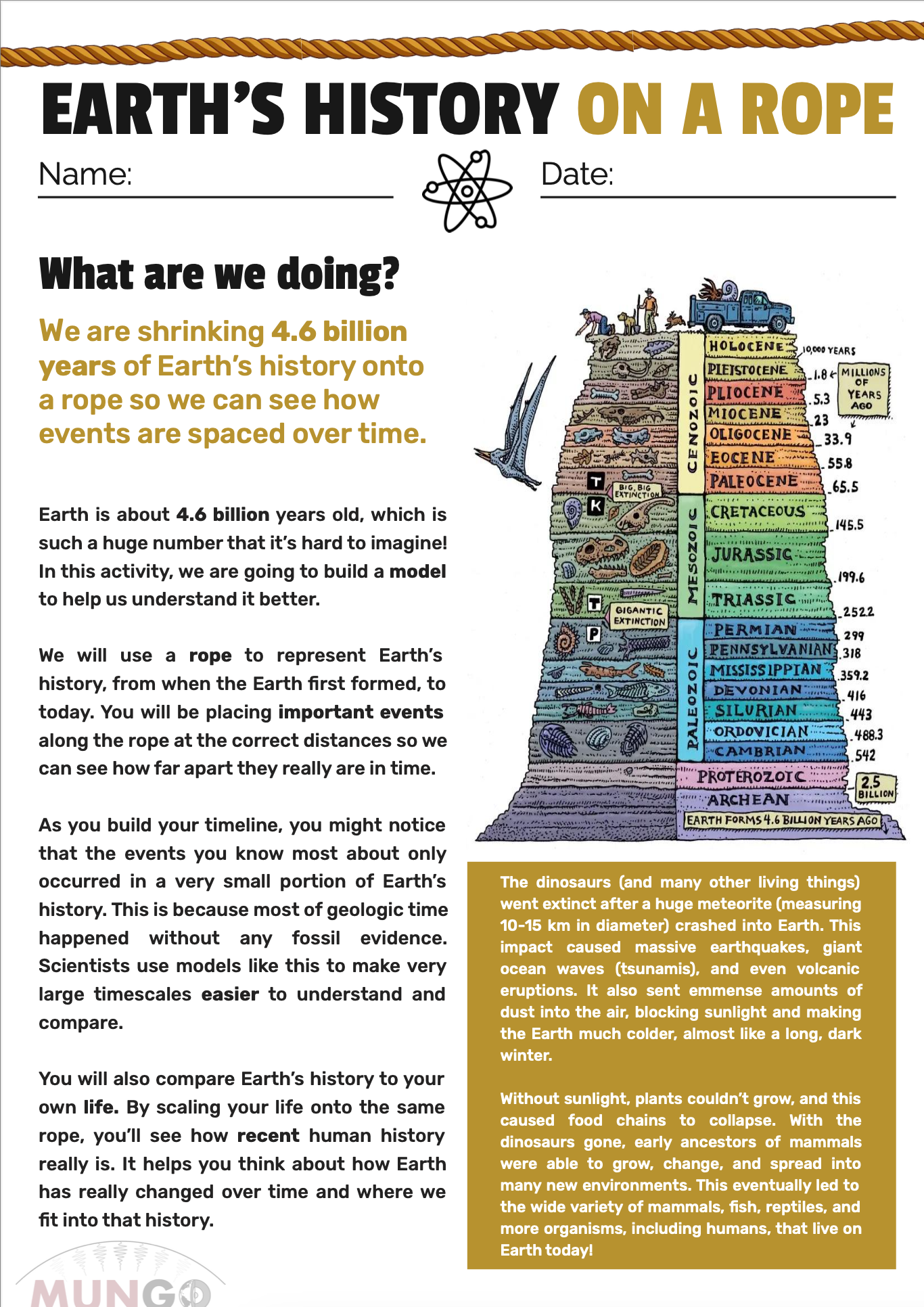
Earth's History on a Rope
A MUNGO-made geological time scale activity where you make a scaled-down model of Earth's 4.6-billion-year history using a length of rope, place major events at their true relative distances apart, then compare that timeline to their own lifespan to grasp just how recent human history really is. The Google Drive folder includes a student worksheet, teacher version, 8 blank event labels, and a Google Sheet for converting milestone dates to rope length.
10.8 - Explain various ways in which rocks can be weathered and eroded to form soils
Mini Lab: Mechanical vs Chemical Weathering
A MUNGO-made lab comparing mechanical weathering (sanding chalk) and chemical weathering (chalk in vinegar), with post-lab questions connecting the reaction to acid rain on marble statues and an extension on ocean acidification's impact on coral reefs. Can be shortened to 20 minutes if needed.
10.9 - Classify various types of soil according to their characteristics (i.e., coarse-textured [sandy/gravel] soil, medium-textured [loamy] soil, fine-textured [clay] soil)
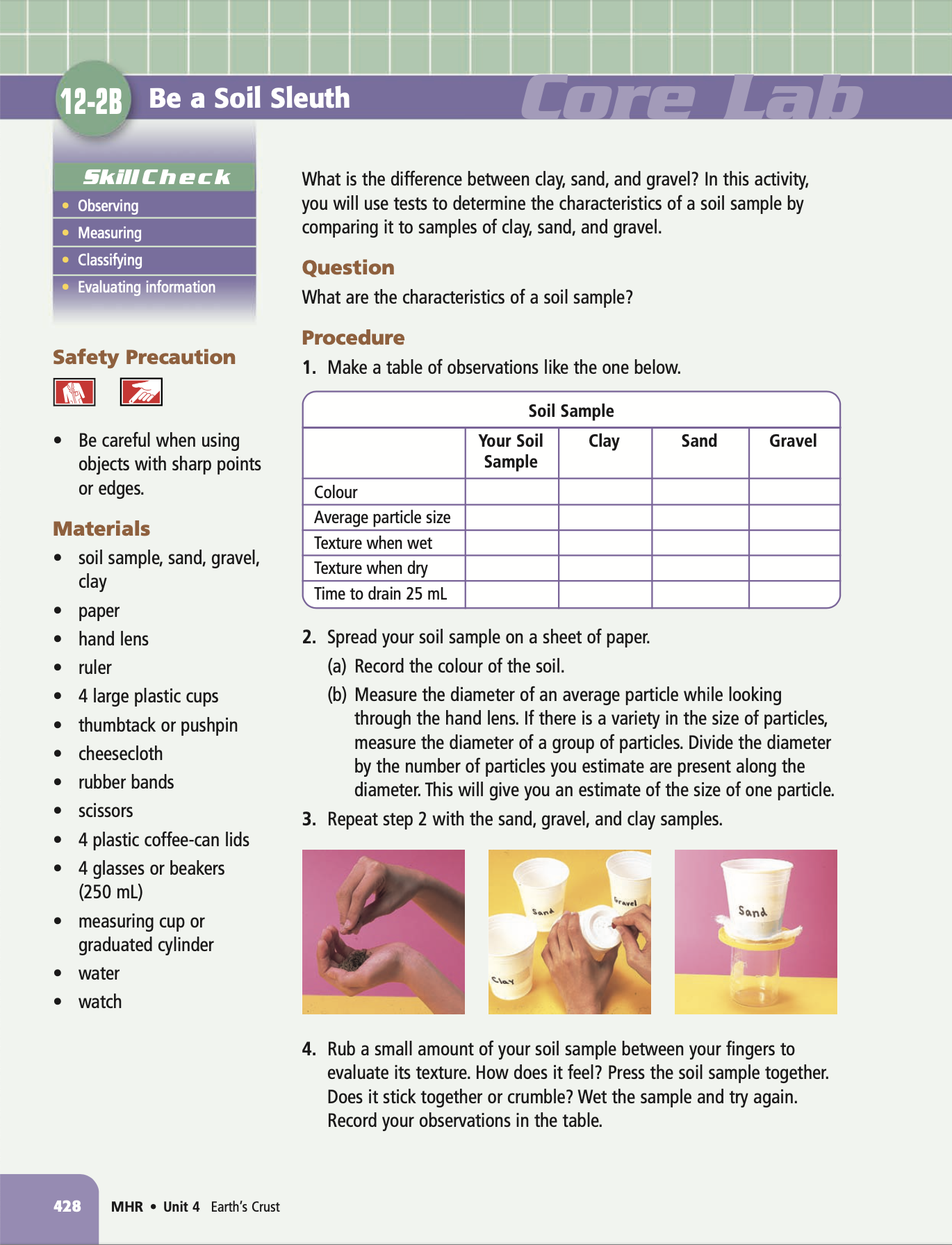
Be a Soil Sleuth Lab
A hands-on lab where students test a soil sample against clay, sand, and gravel using simple drainage tests to identify its characteristics. Includes student worksheet, teacher version, and the accompanying lab manual from the Science 7 textbook.
STSE
Seeing the Big Picture
A traditional curriculum resource (Appendix A, pages 22-27) covering how our understanding of Earth's changing surface has evolved... from early evidence-based reasoning to the theory of continental drift and, eventually, plate tectonics as a major shift in scientific worldview. Includes background information, questions, references, and activities, alongside MUNGO-made teacher version and student version printouts covering the same outcomes.
A New Era for The Rock: Critical Minerals
A MUNGO-made STSE article exploring what critical minerals are, why Newfoundland and Labrador's deposits (like Voisey's Bay nickel and Burin Peninsula fluorspar) matter for green technology, and how geoscientists locate them. Includes career connections in the mining industry and discussion questions on the economic, environmental, and societal impacts of development. Available in English and French junior high versions.
Securing Freshwater with Geophysics
A MUNGO-made STSE article exploring how geophysics (electrical resistivity, seismic and radar methods, etc.) is used to locate underground water, paired with real examples from Newfoundland and Labrador's water challenges. Includes discussion questions on ethics, global humanitarian applications, and Canada's role in freshwater research. Junior high version.
More
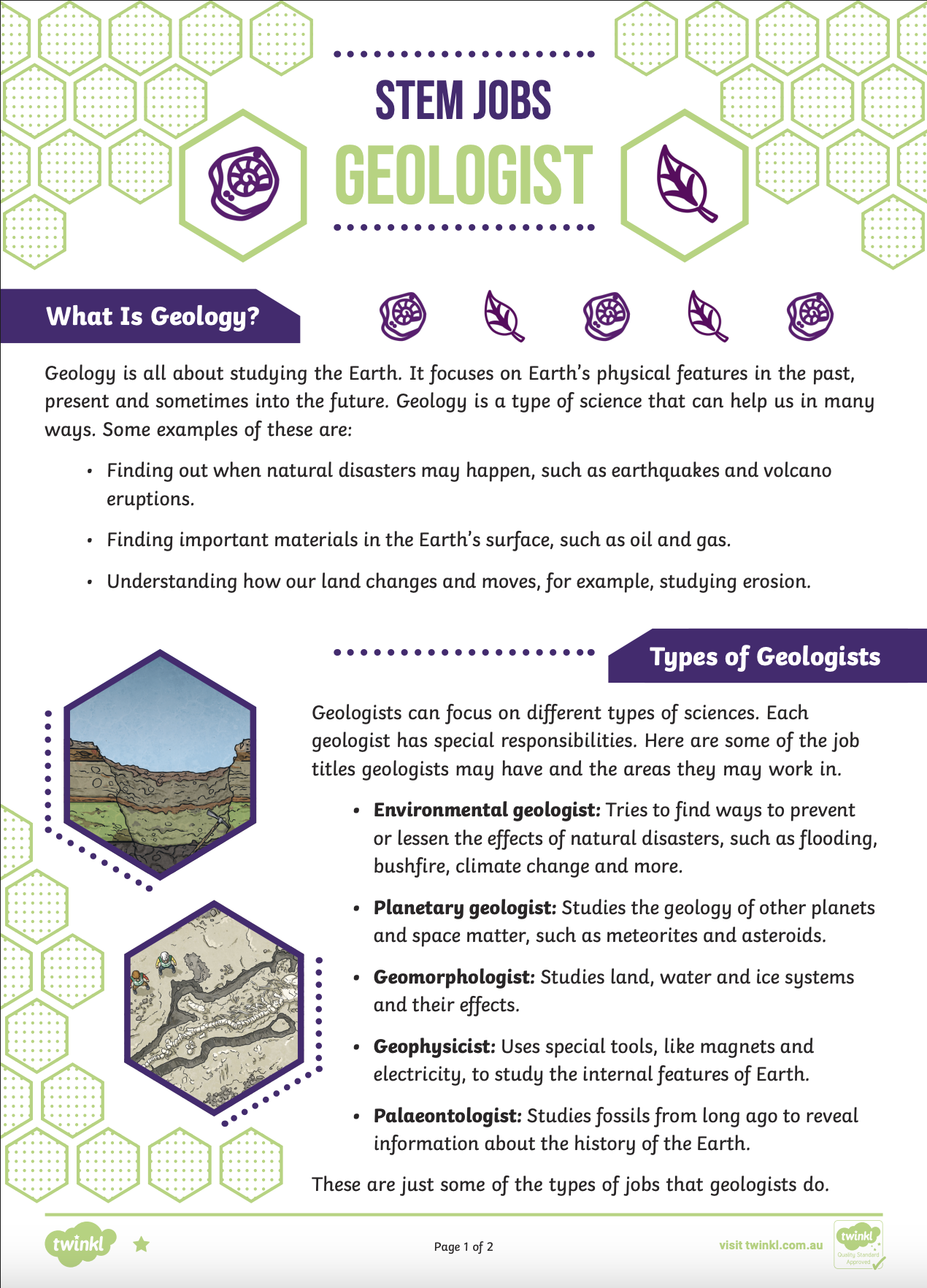
STEM JOBS: Geologist
A career-focused reading resource for Grade 7 students. Covers what geology is, the different types of geologists, and what it takes to pursue the career, with a short answer and multiple-choice quiz at the end to check understanding.
Core Concepts
A set of classroom-ready activities covering foundational Earth science concepts. Hands-on and self-contained, so no prior teacher training workshop is needed to use them. Provided by Mining Matters.
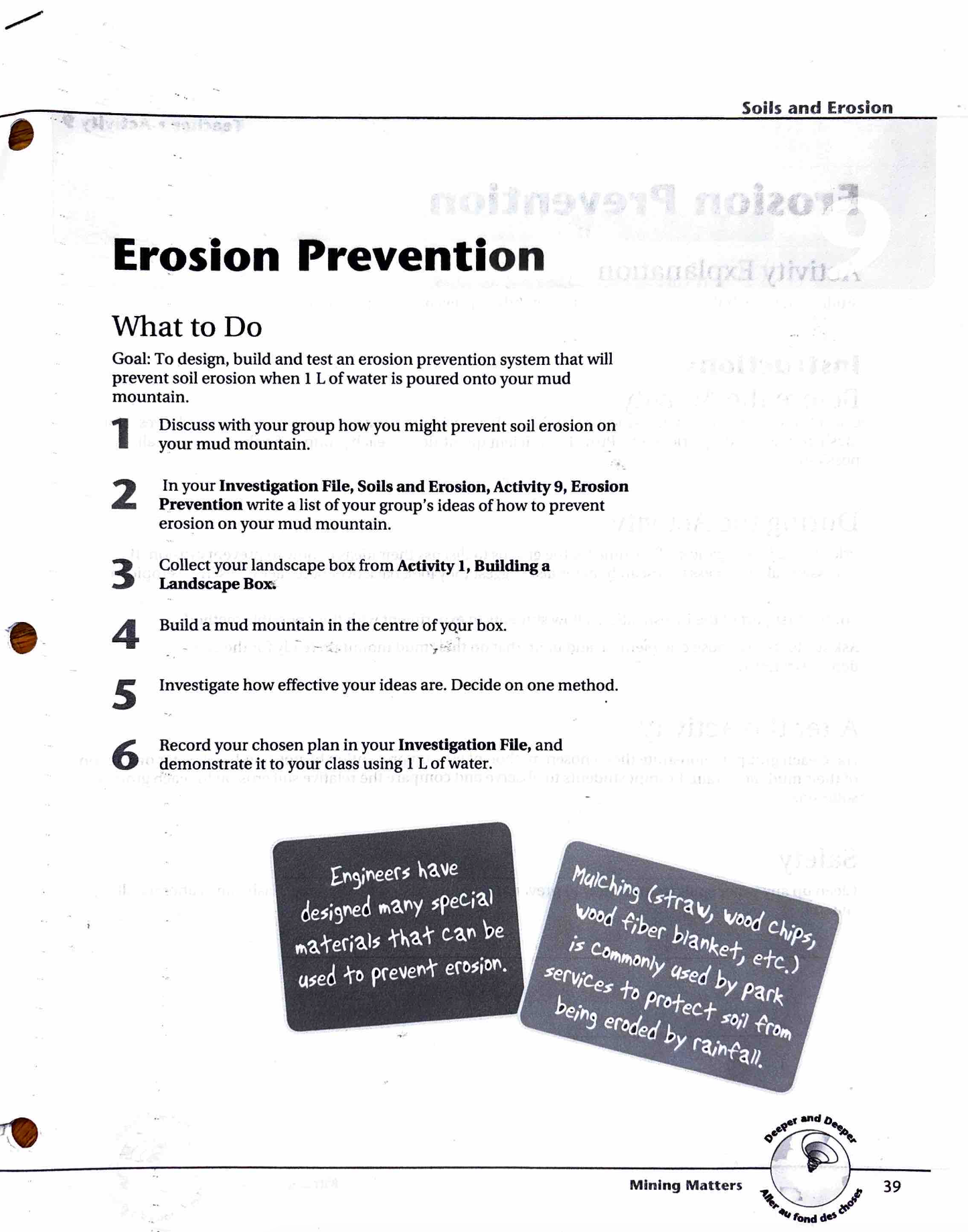
Erosion Prevention Activity
Students design, build, and test their own erosion-prevention system, then evaluate how well it holds up under 1 L of water poured over a mud mountain. Provided by Mining Matters.
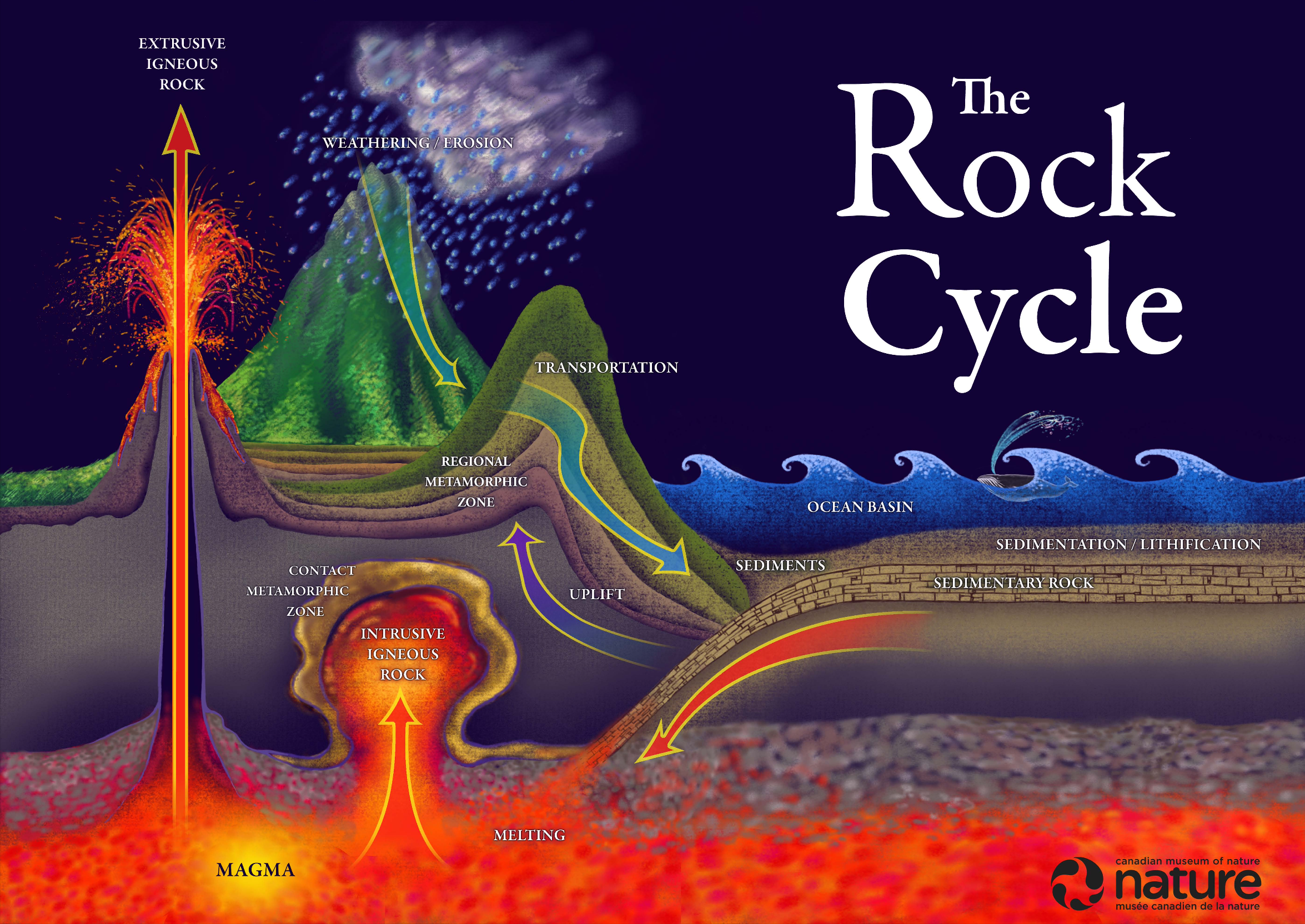
The Rock Cycle
A poster from the Canadian Museum of Nature illustrating the rock cycle and how rocks transform between igneous, sedimentary, and metamorphic forms. Provided by Mining Matters.
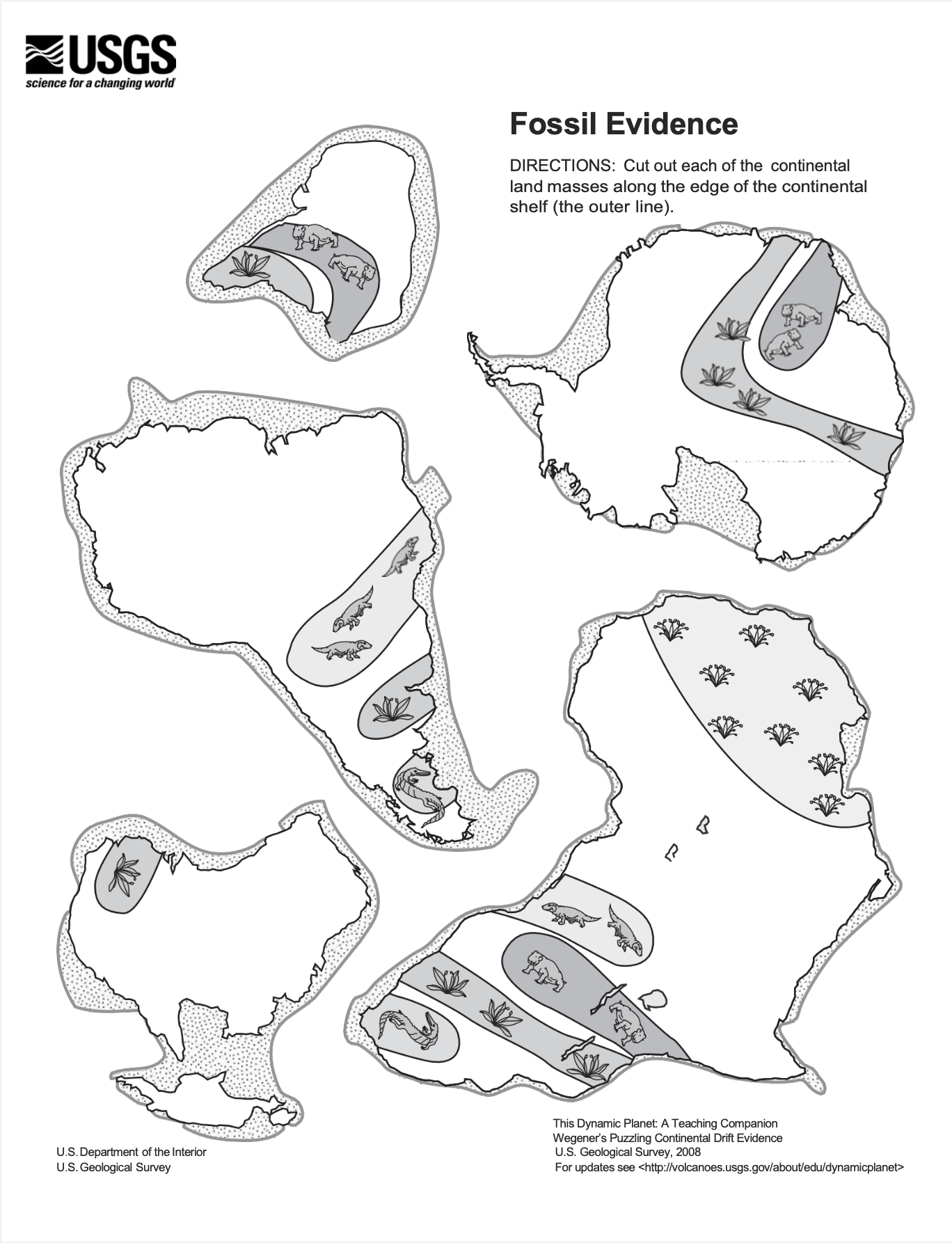
Continental Drift Activity
A USGS resource where students cut out and piece together continents using Wegener's fossil evidence to reconstruct an ancient supercontinent, then evaluate how compelling the fit is. Includes a Wegener student handout and a present-day world map showing continental shelves.
Minecraft Activities: Geology of NL and Geophysics
Explore a custom Minecraft world made by MUNGO that models Newfoundland's real bedrock geology. Visit landmarks like fossil sites and structural features, then use in-game gravity and magnetic maps to hunt for ore deposits like a geophysicist. Includes exploration and mining activities (with Junior High and Senior High versions), plus download instructions.